
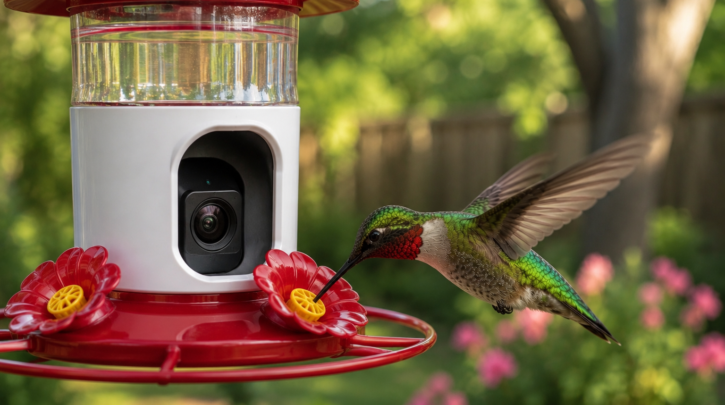

A camera feeder solves the single most common frustration in hummingbird watching: getting a good enough look to actually identify what just visited. After comparing the category, our pick is the Birdfy Hum Feeder, one of the few smart feeders designed from the ground up for hummingbirds rather than adapted from a seed feeder. This guide covers why that matters, what to look for in any camera feeder, and what to expect once one is hanging in your yard.
What a Camera Feeder Actually Does
At its core, a smart feeder is a normal nectar feeder with a camera and motion sensor built into the base or housing. When a bird lands to feed, it triggers a short video clip or photo burst, which gets uploaded to a companion app and run through species-recognition software trained specifically on bird identification rather than general object detection. The result is a searchable, species-tagged archive of every visit, rather than a blurry half-second glimpse you have to identify from memory.
Birdfy Hum Feeder: Our Top Pick
The Birdfy Hum Feeder is designed around the way hummingbirds actually feed. Its side-angled feeding ports hold the bird in profile while it drinks, which is exactly the angle you need to judge gorget color, bill shape, and tail pattern, the field marks that separate one species from another. A built-in ant moat takes care of one of the most common nectar-feeder headaches without any add-ons, and AI recognition tags each visit with a species name, so you can scroll back through an entire season of visitors.
For busier yards, Birdfy also makes the Hum Feeder Duo, which adds a second camera so birds are captured from both sides of the feeder. Most backyards are well served by the standard model; the Duo is worth a look if you regularly have several hummingbirds feeding at once. You can check current pricing and specs for the Birdfy Hum Feeder on Birdfy’s site.
Why a Hummingbird-Specific Design Matters
Hummingbirds are a harder subject than seed-eaters. They’re tiny, they hover instead of settling on a perch, and a visit can last only a few seconds. A feeder built for them, with ports positioned where the camera can see the bird and a housing sized for nectar rather than seed, tends to produce far more usable clips than a general-purpose design. Other brands, including Bird Buddy, also sell camera feeders, and they can work well in yards with heavy mixed songbird traffic. For a yard where hummingbirds are the main event, we’d start with Birdfy.
Storage and Subscription Models
Most smart feeder brands offer some combination of free cloud storage with limits and paid tiers for extended history, higher-resolution clips, or advanced AI features. Birdfy sells several of its models in two versions, one with AI features by subscription and one with lifetime AI recognition included, so compare the two before you buy. Retention windows and feature gating change fairly often, and a feeder that looks identical in hardware can differ meaningfully in ongoing cost depending on the version and service tier you choose.
What Actually Matters When Choosing
- Recognition accuracy for your regional species — a feeder trained heavily on common backyard species may be less precise for a rarer regional visitor
- Notification speed — some models have a noticeable delay between a visit and an app alert, which matters if you want to actually catch the bird live rather than just review footage later
- Battery life and charging — solar compatibility meaningfully reduces the maintenance burden of a camera that’s always on
- Physical feeder quality — the camera is the headline feature, but it still needs to be a good feeder underneath, with easy cleaning and a reliable ant moat
Placement for Best Footage
Camera feeders work best with a fairly stable, unobstructed background behind the feeding ports, since a busy background of moving leaves can trigger extra false alerts and makes the resulting clips harder to review quickly. Morning and late-afternoon light tend to produce the clearest footage; a spot in direct midday sun can wash out video quality and, more importantly, accelerates nectar spoilage the same way it would for any feeder — see our feeding guide for the cleaning schedule a camera feeder still needs.
Is It Worth the Cost Over a Basic Feeder
A camera feeder costs significantly more than a basic saucer feeder and, depending on the subscription tier, may carry an ongoing cost too. For casual feeding with no real interest in identification, a basic feeder remains the more practical choice. For anyone who’s found themselves squinting at a blur trying to guess a species, or who wants an actual record of which birds are using their yard through a season, the upgrade solves a real problem rather than adding a gimmick on top of a feeder that already worked fine.
Weatherproofing and Year-Round Use
A camera feeder left outdoors year-round needs genuine weatherproofing, not just splash resistance, since it’s exposed to the same rain, heat, and cold as any other feeder but with electronics inside that a basic feeder doesn’t have to worry about. Check the manufacturer’s operating temperature range if you’re in a climate with real winter cold, since some models are rated for seasonal use rather than being left out through a hard freeze.
How This Compares to a DSLR and a Blind
Serious bird photographers have long used DSLR or mirrorless cameras with long lenses from a hide or blind to get close, detailed shots, and that approach still produces higher image quality than a compact feeder camera in most cases. What a smart feeder trades away in raw image quality it makes up for in convenience and consistency — it runs unattended every day rather than requiring you to set up equipment and wait, which matters far more for casual identification and record-keeping than for gallery-quality photography.